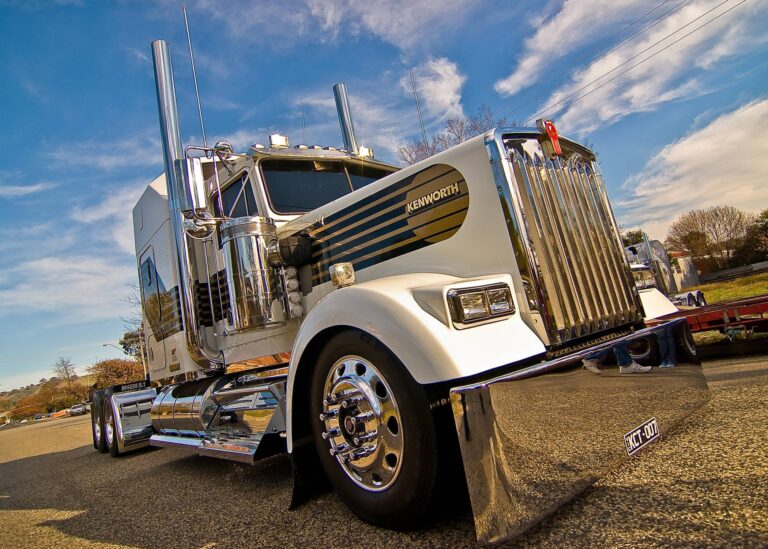
The Ultimate Guide to Truck Parts Names: Unveiling the Anatomy of Your Rig
The Ultimate Guide to Truck Parts Names: Unveiling the Anatomy of Your Rig Typestruck.Guidemechanic.com
Understanding the intricate machinery that powers a heavy-duty truck is essential for anyone involved in the trucking industry. Whether you’re a seasoned owner-operator, a new fleet manager, an aspiring mechanic, or simply curious about these magnificent machines, knowing the proper truck parts names is more than just technical jargon – it’s a cornerstone of safety, efficiency, and smart maintenance.
Based on my extensive experience in the trucking world, a solid grasp of component identification can save you significant time and money. It empowers you to communicate effectively with mechanics, troubleshoot issues confidently, and make informed decisions about repairs and upgrades. This comprehensive guide aims to demystify the complex world of truck components, transforming confusion into clarity.
The Ultimate Guide to Truck Parts Names: Unveiling the Anatomy of Your Rig
We’re not just listing parts; we’re diving deep into their functions, importance, and common issues, providing you with a pillar of knowledge for all things truck anatomy. By the end of this article, you’ll possess a far greater appreciation for the engineering marvel that is a modern commercial truck.
The Heartbeat of the Rig: Engine and Powertrain Components
At the core of every truck’s power lies its engine and the subsequent powertrain that translates that power into motion. These components are arguably the most vital, demanding meticulous attention and understanding. Neglecting them can lead to catastrophic failures and costly downtime.
The Engine: Powering Your Journey
The engine is the prime mover, converting fuel into mechanical energy. It’s a complex assembly of precision-engineered parts working in harmony.
- Engine Block: This is the foundational structure of the engine, often made from cast iron or aluminum. It houses the cylinders where combustion occurs and provides mounting points for numerous other components. The block endures immense heat and pressure, making its integrity paramount.
- Pro tip from us: Always ensure proper cooling system maintenance. Overheating is a primary enemy of the engine block, leading to warping or cracking, which are incredibly expensive repairs.
- Cylinder Head: Bolted to the top of the engine block, the cylinder head encloses the combustion chambers and contains the valves (intake and exhaust), camshafts, and fuel injectors. It’s a critical component for regulating air and fuel flow and expelling exhaust gases.
- Common mistakes to avoid are neglecting regular valve adjustments or ignoring coolant leaks around the cylinder head gasket. These small issues can quickly escalate into major engine problems.
- Pistons and Connecting Rods: Pistons move up and down within the cylinders, driven by the expanding gases of combustion. Connecting rods link the pistons to the crankshaft, converting the linear motion of the pistons into the rotational motion of the crankshaft. These components are subjected to incredible forces and precise tolerances are essential for their operation.
- Crankshaft: This heavy-duty shaft, located at the bottom of the engine block, is responsible for converting the reciprocating motion of the pistons into rotational energy. It’s the output shaft of the engine, driving the transmission and other ancillary systems. A balanced and robust crankshaft is crucial for smooth engine operation and longevity.
- Turbocharger: Many modern heavy-duty truck engines utilize a turbocharger to boost engine power and efficiency. It uses exhaust gases to spin a turbine, which in turn drives a compressor to force more air into the engine’s cylinders. This "forced induction" significantly increases horsepower and torque.
- Based on my experience, proper turbocharger maintenance, including regular oil changes with the correct viscosity and allowing the engine to cool down before shutdown, can drastically extend its lifespan.
The Powertrain: Delivering Power to the Wheels
Beyond the engine, the powertrain ensures that power is efficiently transmitted to the driving wheels.
- Transmission: This system manages the engine’s power output, allowing the driver to select different gear ratios for varying speeds and loads. Heavy-duty trucks can have manual transmissions with many gears (e.g., 10, 13, 18 speeds) or increasingly common automated manual transmissions (AMTs).
- Understanding your transmission and its operational nuances is vital for fuel efficiency and preventing premature wear. Proper shifting techniques, especially in manual trucks, make a huge difference.
- Clutch: In manual transmission trucks, the clutch connects and disconnects the engine from the transmission, allowing for gear changes and smooth starts. It’s a wear item that requires periodic replacement.
- Pro tips from us: Avoid "riding" the clutch and ensure proper pedal adjustment to maximize clutch life.
- Driveshaft: This long, rotating shaft transmits power from the transmission to the differential(s) on the rear axles. It’s designed to withstand high torque and often includes universal joints (U-joints) to accommodate changes in angle.
- Differential: Located in the axle housing, the differential allows the drive wheels to rotate at different speeds when the truck turns. This is crucial for preventing tire scrub and maintaining control. Heavy-duty trucks often have multiple differentials (inter-axle and wheel-end) to distribute power effectively across multiple drive axles.
The Foundation of Stability: Chassis and Suspension System
The chassis forms the structural backbone of the truck, while the suspension system ensures a smooth ride, handles load distribution, and maintains tire contact with the road. These systems are critical for vehicle control, safety, and driver comfort.
The Chassis: The Truck’s Skeleton
- Frame Rails: These are the primary structural beams, typically made of high-strength steel, that run the length of the truck. They support the engine, cab, body, and all other components, bearing the entire load.
- Based on my experience, inspecting frame rails for cracks or corrosion during pre-trip inspections is non-negotiable. A compromised frame is a serious safety hazard.
- Crossmembers: These structural elements connect the frame rails, adding rigidity and preventing twisting. Their strategic placement is key to the overall strength and stability of the chassis.
- Axles (Front and Rear): Axles are central shafts that connect wheels and support the vehicle’s weight. The front axle is primarily for steering, while rear axles (often multiple on heavy trucks) are typically drive axles, transferring power to the wheels.
The Suspension: Ride Comfort and Load Management
- Leaf Springs: A traditional suspension component consisting of several layers of steel "leaves" bolted together. They support the load and absorb road shock, providing a robust and reliable suspension.
- Air Springs (Air Bags): Increasingly common in modern heavy-duty trucks, air springs use compressed air to cushion the ride. They offer superior ride comfort, adjustability for different loads, and better cargo protection.
- Pro tips from us: Regularly check air lines and fittings for leaks. A faulty air spring can lead to uneven load distribution and poor handling.
- Shock Absorbers: These hydraulic devices dampen the oscillations of the springs, preventing excessive bouncing and improving tire contact with the road. Worn shock absorbers can severely impact handling and braking performance.
- Kingpins: Found in the front steering axle, kingpins are pivot points that allow the steering knuckles (and thus the wheels) to turn. Their proper lubrication and condition are vital for accurate steering.
- Tie Rods and Drag Link: These components are part of the steering linkage. The drag link connects the steering gear to the steering arm, while tie rods connect the steering knuckles, ensuring both front wheels turn in unison.
- Common mistakes to avoid are neglecting to check for excessive play in these components. Loose steering linkage can lead to wandering and dangerous handling.
Stopping Power: The Braking System
No component is more critical for safety than the braking system. Heavy-duty trucks rely on sophisticated air brake systems designed to stop massive loads reliably.
- Air Compressor: This engine-driven component builds and maintains the supply of compressed air for the braking system and other air-powered accessories. It’s the starting point of your air brake system.
- Air Tanks (Reservoirs): These tanks store the compressed air supplied by the compressor, ensuring a constant supply for braking. They often include drain valves to remove condensation, which is crucial for preventing system corrosion.
- Brake Chambers: These devices convert air pressure into mechanical force. When air pressure is applied, a diaphragm moves a pushrod, which in turn actuates the slack adjuster.
- Slack Adjusters: These mechanisms automatically or manually adjust the brake shoes to compensate for lining wear, ensuring consistent brake performance. Automatic slack adjusters are standard on modern trucks.
- Brake Drums/Rotors and Brake Shoes/Pads: These are the friction components. Brake shoes press against the inside of brake drums (drum brakes), or brake pads are squeezed by calipers against rotors (disc brakes) to create friction and slow the vehicle.
- Based on my experience, regular inspection of brake lining thickness and drum/rotor condition is paramount. Never postpone brake maintenance.
- ABS (Anti-lock Braking System) Sensors: These sensors monitor wheel speed. If a wheel locks up during braking, the ABS system modulates brake pressure to that wheel, preventing skidding and maintaining steering control.
- For more insights into truck maintenance, consider reading our article on
.
- For more insights into truck maintenance, consider reading our article on
The Electrical Nerve Center: Electrical System
Modern trucks are highly dependent on their electrical systems, which power everything from the engine’s control unit to the cabin lights and critical safety features.
- Battery: Provides the initial surge of power to start the engine and acts as a reservoir for electrical power when the engine is off or when the alternator can’t meet the electrical demand. Heavy-duty trucks typically use multiple 12-volt batteries connected in series for a 24-volt system or parallel for increased amperage.
- Alternator: Once the engine is running, the alternator generates electrical power to recharge the battery and supply power to all electrical systems. It’s the primary power source for the truck’s electrical needs while in operation.
- Starter Motor: This electric motor engages the engine’s flywheel, cranking the engine to initiate combustion. It requires a significant amount of power from the battery.
- Wiring Harness: A complex network of insulated wires that transmit electrical signals and power throughout the truck, connecting all components. Damage to a wiring harness can lead to various electrical malfunctions.
- ECU (Engine Control Unit) / ECM (Engine Control Module): This is the "brain" of the engine, an onboard computer that monitors and controls numerous engine functions, including fuel injection, ignition timing, and emissions.
- Pro tips from us: When troubleshooting electrical issues, always start with the basics: battery charge, terminal connections, and fuses before delving into complex ECU diagnostics.
- Lights (Headlights, Taillights, Marker Lights): Essential for visibility and safety, especially during night driving or adverse weather conditions. All lights must be operational and properly aimed according to regulations.
Comfort, Control, and Visibility: Cab and Interior Components
The cab is the driver’s office, and its components are designed for comfort, control, and maximizing visibility for safe operation.
- Steering Wheel and Column: The primary interface for controlling the truck’s direction. The steering column houses the steering shaft and often includes controls for turn signals, wipers, and cruise control.
- Dashboard / Instrument Cluster: Houses gauges (speedometer, tachometer, fuel, oil pressure, coolant temperature, air pressure), warning lights, and various switches, providing critical operational information to the driver.
- Seats: Designed for long-haul comfort, truck seats are typically air-ride suspended and highly adjustable to reduce driver fatigue.
- HVAC System (Heating, Ventilation, and Air Conditioning): Maintains a comfortable cabin temperature and ensures clear visibility by defrosting windows.
- Windshield and Mirrors: Critical for driver visibility. The windshield provides a clear view ahead, while multiple mirrors (side mirrors, convex mirrors) eliminate blind spots and aid in maneuvering.
- Common mistakes to avoid are operating with cracked windshields or damaged mirrors, which compromise safety and can lead to violations.
The Outer Shell: Exterior and Body Components
These parts define the truck’s appearance, contribute to its aerodynamics, and protect its internal systems.
- Hood and Fenders: The hood provides access to the engine compartment, while fenders protect the engine and other components from road debris.
- Grille: Located at the front of the truck, the grille allows airflow to the radiator for engine cooling and often houses the truck’s brand emblem.
- Bumper: Designed to absorb minor impacts and protect the front of the truck.
- Fuel Tank: Stores the diesel fuel for the engine. Heavy-duty trucks often have multiple large-capacity fuel tanks to support long operating ranges.
- Fifth Wheel: On semi-trucks, the fifth wheel is a coupling device mounted on the tractor’s frame that connects to the kingpin on a semi-trailer. It allows the trailer to pivot during turns.
- Based on my experience, proper lubrication and regular inspection of the fifth wheel are crucial for preventing trailer disconnects and ensuring safe operation.
- Mud Flaps: Located behind the wheels, mud flaps prevent spray and debris from being thrown up by the tires, protecting other vehicles and the truck itself.
- Aerodynamic Fairings: These panels (often on the cab, sides, and roof) are designed to reduce air resistance, improving fuel efficiency.
Ground Contact: Tires and Wheels
The only parts of the truck that consistently touch the road, tires and wheels are fundamental for traction, braking, and carrying the load.
- Tires: Critical for grip, cushioning, and supporting the vehicle’s weight. Heavy-duty trucks use specialized tires designed for durability, load capacity, and specific applications (e.g., steer, drive, trailer tires).
- Pro tips from us: Maintaining correct tire pressure is the single most important factor for tire longevity, fuel efficiency, and safety. Under-inflated tires are a leading cause of blowouts.
- Rims / Wheels: The metal structures that the tires are mounted on. They must be robust enough to handle the truck’s weight and the stresses of driving.
- Hubs: The central part of the wheel assembly that attaches the wheel to the axle and contains the wheel bearings.
- Lug Nuts: Fasteners that secure the wheel to the hub. Proper torqueing of lug nuts is essential to prevent wheels from coming loose.
- For detailed advice on tire management, check out our guide on
. You can also find valuable resources on tire safety and maintenance from external sources like the National Highway Traffic Safety Administration (NHTSA) at https://www.nhtsa.gov/.
- For detailed advice on tire management, check out our guide on
Conclusion: Your Knowledge, Your Advantage
Navigating the world of truck parts names might seem daunting initially, but with this comprehensive guide, you’re now equipped with a robust understanding of the critical components that make these powerful machines operate. From the thrumming engine to the steadfast frame, each part plays a vital role in the truck’s overall performance, safety, and longevity.
Developing this foundational knowledge is an invaluable asset. It empowers you to perform more effective pre-trip inspections, engage in intelligent conversations with service technicians, and ultimately, make more informed decisions that protect your investment and ensure safe operations. Remember, a well-understood truck is a well-maintained truck, and that translates directly into profitability and peace of mind on the open road. Keep learning, keep exploring, and keep those wheels turning safely!