The Ultimate Guide to Finding the Best Used Trucks for Towing Travel Trailers
The Ultimate Guide to Finding the Best Used Trucks for Towing Travel Trailers Typestruck.Guidemechanic.com
Embarking on the open road with your travel trailer in tow is a dream for many, promising adventure, freedom, and unforgettable memories. But before you hitch up and head out, you need the right vehicle – a robust, reliable truck capable of handling the load safely and efficiently. While a brand-new truck might seem appealing, the savvy RVer often turns to the used market, where incredible value meets proven performance.
Finding the best used trucks for towing travel trailers isn’t just about picking the biggest engine; it’s a nuanced decision involving understanding towing capacities, payload, maintenance history, and a host of other critical factors. This comprehensive guide, crafted from years of experience on the road and in the garage, will arm you with the knowledge to make an informed choice, ensuring your towing experience is safe, enjoyable, and within budget. We’ll dive deep into what truly matters, from engine types to axle ratios, and highlight the top contenders in the used truck market.
The Ultimate Guide to Finding the Best Used Trucks for Towing Travel Trailers
Why Opt for a Used Truck for Towing Your Travel Trailer?
The appeal of a new truck is undeniable: the latest technology, a fresh warranty, and that new car smell. However, when it comes to a dedicated tow vehicle for your travel trailer, a used truck often presents a significantly more intelligent investment. The depreciation hit on new vehicles is substantial, especially in the first few years. By choosing a pre-owned model, you let someone else absorb that initial financial impact, allowing you to acquire a highly capable truck at a fraction of the original cost.
Based on my experience, a well-maintained used truck can offer identical towing prowess and reliability as its brand-new counterpart, often for tens of thousands of dollars less. This saved capital can then be allocated to essential towing accessories, trailer upgrades, or even more road trips. Furthermore, many tried-and-true truck platforms have proven their durability over years, meaning you’re often buying into a legacy of robust engineering rather than unproven new features.
Understanding Towing Basics: The Foundation of Safe Towing
Before you even begin looking at specific truck models, it’s absolutely crucial to grasp the fundamental concepts of towing. Misunderstanding these terms is a common mistake that can lead to unsafe towing conditions, premature vehicle wear, and even legal issues. Your travel trailer has specific requirements, and your truck must meet or exceed them.
Towing Capacity vs. Payload Capacity: Not the Same Thing!
Many new towers confuse these two vital metrics. Towing capacity refers to the maximum weight your truck can pull, including the trailer itself and everything inside it. This number is often heavily marketed and is usually the first thing people look at. However, payload capacity is equally, if not more, important.
Payload capacity is the maximum weight your truck can carry in its bed and cabin, including passengers, cargo, and crucially, the trailer’s tongue weight. The tongue weight is the downward force exerted by the trailer’s hitch onto your truck’s receiver. It typically ranges from 10-15% of the total trailer weight. Overlooking payload capacity is a common pitfall; a truck might have a high towing capacity, but if its payload is insufficient for your family, gear, and the trailer’s tongue weight, you’re overloaded.
Gross Vehicle Weight Rating (GVWR), Gross Combined Weight Rating (GCWR), and Gross Axle Weight Rating (GAWR)
These acronyms are the backbone of safe towing limits. Your truck has a GVWR, which is the maximum permissible total weight of the truck itself when fully loaded with passengers, cargo, and tongue weight. Your travel trailer also has its own GVWR.
The GCWR is the absolute maximum weight of the fully loaded truck and the fully loaded trailer combined. This is the ultimate number to ensure you’re not exceeding the manufacturer’s safe operating limits for the entire rig. Finally, GAWR specifies the maximum weight that can be safely placed on each axle (front and rear) of your truck. Always check your truck’s door jamb sticker for these critical numbers. Pro tips from us: Never assume; always verify these numbers against your specific truck and trailer.
Key Factors When Choosing a Used Towing Truck
Selecting the right used truck involves a meticulous evaluation of its components and history. Each element plays a significant role in its ability to safely and effectively tow your travel trailer.
Engine Type: Gas vs. Diesel Powerhouses
The heart of any towing truck is its engine, and the choice between gas and diesel is one of the most fundamental decisions.
- Gasoline Engines: Generally more affordable to purchase and maintain, gas engines in modern trucks (especially V8s and turbo V6s like Ford’s EcoBoost) offer excellent horsepower and can handle most travel trailers up to about 10,000-12,000 pounds. They perform well in stop-and-go traffic and don’t require specialized fuel or emissions systems. However, they tend to achieve lower fuel economy when towing heavy loads, and their torque delivery might not feel as robust at lower RPMs compared to diesel.
- Diesel Engines: Diesel trucks, often found in 3/4-ton and 1-ton models, are the undisputed kings of heavy towing. Their immense low-end torque allows them to effortlessly pull very heavy travel trailers, especially up steep grades. They typically offer superior fuel economy when towing and possess an incredible lifespan. The trade-off? Higher initial purchase price (even used), more expensive maintenance, and the need for Diesel Exhaust Fluid (DEF) in newer models. Based on my experience, if your travel trailer is consistently over 10,000 pounds or you plan on frequent mountain towing, a diesel engine is often worth the extra investment for the sheer capability and reduced strain.
Transmission: Automatic with Tow/Haul Mode is King
For towing, an automatic transmission is almost universally preferred. Look for a truck equipped with a dedicated "Tow/Haul" mode. This feature alters the transmission’s shift points, holds gears longer, and provides engine braking on descents, all of which are crucial for managing heavy loads and preventing transmission overheating. Manual transmissions are rare in modern heavy-duty trucks and generally not recommended for regular travel trailer towing due due to clutch wear and less convenient operation.
Axle Ratio: A Subtle but Significant Detail
The axle ratio dictates how many times the driveshaft spins for one rotation of the wheel. A "higher" numerical ratio (e.g., 3.73, 4.10) means more engine revolutions per wheel revolution, providing more torque at the wheels for better towing performance, especially from a standstill and on inclines. The trade-off is slightly worse fuel economy when unloaded. For serious towing, always lean towards a higher (numerically larger) axle ratio if available for the model you’re considering. This is a common mistake overlooked by many buyers, but it makes a significant difference in towing feel.
Brakes: Capability Beyond the Engine
A truck’s ability to stop safely is as important as its ability to go. Heavy-duty brakes are non-negotiable for towing. Ensure the used truck you’re considering has robust disc brakes, preferably with good ventilation. Furthermore, a factory-integrated trailer brake controller is a huge plus. This system allows your truck to communicate directly with your trailer’s electric brakes, providing smooth, proportional braking for the entire rig. If not factory-installed, an aftermarket controller is essential.
Tires: The Unsung Heroes of Towing
The tires on your potential tow vehicle must be in excellent condition and have an adequate load rating. Light-duty passenger tires are unsuitable for towing travel trailers. Look for "LT" (Light Truck) rated tires, which have stronger sidewalls and higher load capacities. Always check the tire pressure recommended for towing, which is often higher than for unloaded driving. Pro tips from us: inspect for uneven wear, cracks, or punctures, as new tires for heavy-duty trucks can be a significant expense.
Hitch Type: Tailored to Your Trailer
Most travel trailers utilize a conventional bumper-pull hitch. Ensure the truck you’re looking at has a robust Class III, IV, or V receiver hitch that matches or exceeds your trailer’s tongue weight and overall weight. For very large travel trailers (often called destination trailers) or fifth-wheel trailers, you’ll need a truck equipped with or capable of having a fifth-wheel or gooseneck hitch installed in the bed. For the scope of "travel trailers," we’ll focus primarily on bumper-pull capabilities.
Tow Package: Look for the Full Suite
Many used trucks will advertise a "tow package." This usually includes a heavy-duty receiver hitch, wiring for trailer lights and brakes, and often an upgraded cooling system (transmission cooler, engine oil cooler). Some premium packages also include integrated brake controllers, upgraded alternators, and heavier-duty suspensions. These factory-installed features are generally more reliable and integrated than aftermarket solutions.
Maintenance History: The Window to a Truck’s Soul
This is arguably the most critical factor for a used truck. A comprehensive service history reveals how well the previous owner cared for the vehicle. Look for regular oil changes, transmission fluid services, brake maintenance, and tire rotations. A truck that has been regularly serviced is far more likely to be reliable for towing. Common mistakes to avoid are buying a truck without a verifiable history, as hidden problems can quickly turn a good deal into a money pit.
Mileage and Condition: Striking the Right Balance
High mileage isn’t necessarily a deal-breaker for well-maintained trucks, especially diesels, which are known for longevity. However, moderate mileage (e.g., 80,000-150,000 miles for a gas truck, up to 200,000+ for a diesel) often offers the best balance of value and remaining service life. Inspect the overall condition for signs of neglect: excessive rust, fluid leaks, worn interior, or aftermarket modifications that might compromise reliability. Based on my experience, a truck with higher mileage but impeccable service records is often a better bet than a lower-mileage truck with a spotty history.
Decoding Truck Classes: Half-Ton, Three-Quarter Ton, One-Ton
Trucks are traditionally categorized by their hauling and towing capacities, often referred to as "half-ton," "three-quarter ton," and "one-ton." These designations historically referred to the truck’s payload capacity, though modern trucks far exceed these nominal values. Understanding these classes helps you match the truck to your travel trailer’s specific needs.
Half-Ton Trucks (e.g., Ford F-150, Ram 1500, Chevy Silverado 1500, Toyota Tundra):
These are the most popular pickup trucks on the market, offering a blend of daily drivability and significant towing capability. Modern half-tons, especially those equipped with robust V8s or powerful turbo V6 engines and a proper tow package, can comfortably tow most travel trailers ranging from 5,000 to 10,000 pounds. Their lighter weight and more comfortable ride make them excellent choices for those with smaller to mid-sized travel trailers who also use their truck as a daily driver. However, always be mindful of their payload limits, as this is often where they reach their maximum capacity first when towing a loaded travel trailer with passengers and gear.
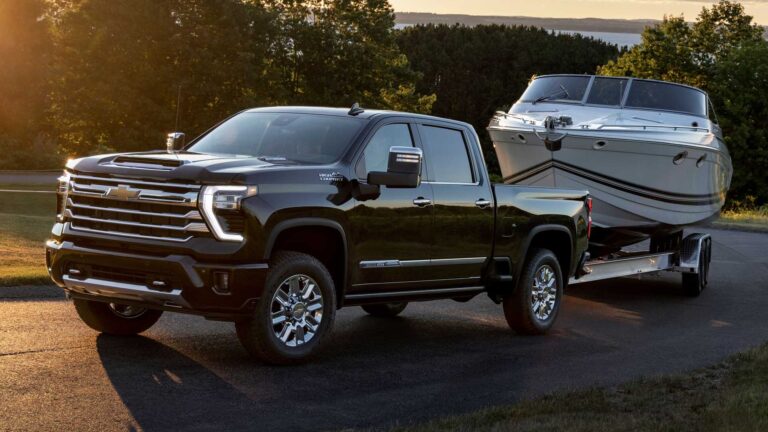
Three-Quarter Ton Trucks (e.g., Ford F-250, Ram 2500, Chevy Silverado 2500HD, GMC Sierra 2500HD):
When your travel trailer starts creeping above 10,000 pounds or approaches the 12,000-pound mark, or if you regularly tow through mountainous terrain, a three-quarter ton truck becomes a much more appropriate and safer choice. These "heavy-duty" trucks boast stronger frames, more robust suspension systems, larger brakes, and often come equipped with more powerful gas V8 or potent diesel engines. Their higher payload and towing capacities provide a much larger safety margin for bigger travel trailers, allowing for more gear and a less stressed towing experience. They are designed with towing in mind, offering greater stability and control under heavy loads.
One-Ton Trucks (e.g., Ford F-350, Ram 3500, Chevy Silverado 3500HD, GMC Sierra 3500HD):
One-ton trucks are the ultimate towing machines, primarily designed for the heaviest travel trailers, toy haulers, or fifth-wheel RVs. While perhaps overkill for many conventional travel trailers, they offer maximum payload and towing capacities. If you have an exceptionally large or heavy travel trailer (e.g., a large destination trailer) that pushes the limits of a 3/4-ton, or if you plan to upgrade to a massive RV in the future, a one-ton provides unparalleled capability and peace of mind. They typically share many components with their 3/4-ton counterparts but feature even heavier-duty suspension components, often including dual rear wheels (dually) for extreme stability and payload.
Top Contenders: Best Used Trucks For Towing Travel Trailers
Now that we understand the foundational principles, let’s look at some of the most reliable and capable used trucks that consistently rank high for towing travel trailers. We’ll focus on models from roughly 2010 onwards, as these generally offer modern features, improved safety, and better fuel efficiency.
For Half-Ton Towing (Lighter to Mid-Sized Travel Trailers):
-
Ford F-150 (2011-Present, particularly with EcoBoost or 5.0L V8)
- Why it’s great: The F-150 is consistently America’s best-selling truck for a reason. Ford’s 3.5L EcoBoost V6 engine, introduced around 2011, offers phenomenal torque (often exceeding V8s) and excellent towing capacity for a half-ton, sometimes up to 12,000+ pounds depending on configuration. The traditional 5.0L Coyote V8 is also a fantastic, reliable choice, known for its smooth power delivery. Later models (2015+) feature an aluminum body, reducing weight and increasing payload.
- What to look for: Ensure it has the Max Trailer Tow Package for the highest capacities, which includes a larger fuel tank, integrated brake controller, and upgraded stabilizer bar. Check for proper maintenance on EcoBoost engines, especially spark plugs and timing chain.
-
Ram 1500 (2009-Present, especially with 5.7L HEMI V8)
- Why it’s great: Ram trucks are renowned for their comfortable coil-spring rear suspension (or optional air suspension) and the mighty 5.7L HEMI V8. The HEMI provides abundant power and a satisfying exhaust note. Later generations (2019+) pushed towing capacities even higher. Ram’s interior quality has also been a standout feature for years, making long trips more enjoyable.
- What to look for: Check for manifold leaks on older HEMIs. Ensure the transmission (8-speed is excellent) shifts smoothly. The optional air suspension can be great but inspect for proper function.
-
Chevrolet Silverado 1500 / GMC Sierra 1500 (2007-Present, with 5.3L or 6.2L V8)
- Why it’s great: GM’s half-ton twins offer a proven, reliable platform with strong V8 engines. The 5.3L V8 is a workhorse, offering a great balance of power and efficiency, while the 6.2L V8 (often found in higher trims) provides even more grunt for heavier loads. Their traditional body-on-frame construction and robust powertrains make them excellent choices for towing.
- What to look for: Some older 5.3L engines (pre-2014) may have Active Fuel Management (AFM) issues, which can lead to oil consumption. Look for evidence of AFM/Dynamic Fuel Management (DFM) system maintenance or disablement if concerned.
-
Toyota Tundra (2007-Present, with 5.7L i-Force V8)
- Why it’s great: The Tundra is legendary for its reliability and durability, often going hundreds of thousands of miles with minimal issues. The standard 5.7L i-Force V8 is a robust engine, providing ample power and a solid towing capacity for a half-ton (up to around 10,000 pounds). It might not have the absolute highest numbers, but its bulletproof reputation makes it a strong contender in the used market.
- What to look for: Tundras are generally very robust, but check for frame rust in salt-belt states on older models. Ensure the transmission shifts smoothly, as it’s a critical component for longevity.
For Three-Quarter Ton Towing (Medium to Larger Travel Trailers):
-
Ford F-250 Super Duty (2011-Present, with 6.2L Gas V8 or 6.7L Power Stroke Diesel)
- Why it’s great: The F-250 Super Duty is a towing powerhouse. The 6.2L gas V8, introduced in 2011, is a highly capable engine for those not wanting a diesel, offering strong performance for most larger travel trailers. For serious towing, the 6.7L Power Stroke diesel is outstanding, known for its immense torque and reliability. These trucks offer a solid platform, strong brakes, and a heavy-duty suspension, providing exceptional stability.
- What to look for: On diesel models, investigate maintenance records for fuel filter changes and DEF system upkeep. Check for common issues specific to the year, but generally, the 6.7L is a very strong engine.
-
Ram 2500 Heavy Duty (2010-Present, with 6.4L HEMI Gas V8 or 6.7L Cummins Diesel)
- Why it’s great: Ram’s 2500 HD trucks combine serious capability with a surprisingly comfortable ride, especially with the optional rear air suspension. The 6.4L HEMI gas V8 (introduced around 2014) offers best-in-class gas engine power for heavy-duty applications. The legendary 6.7L Cummins turbo-diesel engine is a standout, known for its incredible longevity, massive torque, and relatively simple design (compared to some competitors), making it a favorite among heavy haulers.
- What to look for: For Cummins engines, check for proper maintenance of the diesel particulate filter (DPF) and other emissions components. Test the air suspension thoroughly if equipped.
-
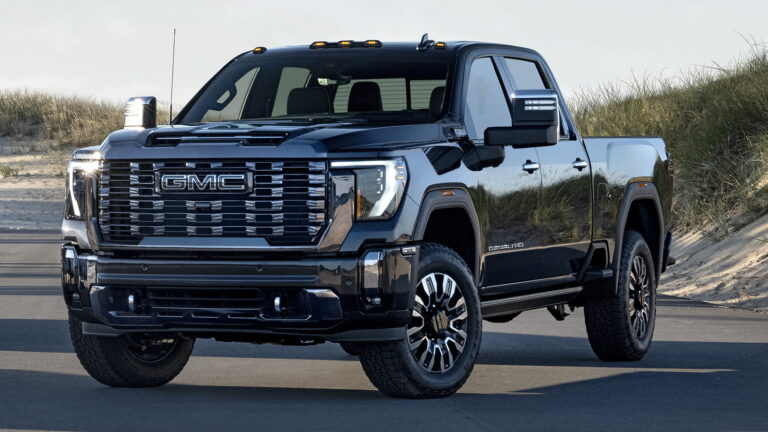
Chevrolet Silverado 2500HD / GMC Sierra 2500HD (2011-Present, with 6.0L/6.6L Gas V8 or 6.6L Duramax Diesel)
- Why it’s great: GM’s HD trucks are known for their robust chassis, excellent Allison transmissions (paired with Duramax diesels), and comfortable interiors. The venerable 6.0L gas V8 has been a reliable workhorse for years, while the more recent 6.6L gas V8 offers increased power. The 6.6L Duramax diesel engine, paired with the Allison transmission, is a formidable combination, offering exceptional towing power and durability.
- What to look for: On Duramax models, ensure the Allison transmission has been serviced. Check for any leaks around the turbo or fuel lines.
The Pre-Purchase Inspection: Don’t Skip This Step!
Once you’ve narrowed down your choices, the pre-purchase inspection is paramount. This isn’t just a suggestion; it’s a non-negotiable step to protect your investment and ensure safety. Based on my experience, overlooking seemingly minor issues during a quick walkthrough can lead to thousands of dollars in repairs down the line.
What to Look For Visually:
- Exterior: Check for accident damage, mismatched paint, excessive rust (especially on the frame, suspension components, and brake lines), and signs of flood damage (mud in unlikely places, musty smell).
- Engine Bay: Look for fluid leaks (oil, coolant, power steering, transmission fluid), frayed belts, corroded battery terminals, and any aftermarket wiring that looks amateurish. Pay attention to the overall cleanliness; a sparkling clean engine might hide leaks.
- Interior: Check for excessive wear on seats, pedals, and steering wheel that doesn’t match the odometer reading. Test all electronics: windows, locks, radio, AC/heat, and importantly, the trailer brake controller if equipped.
- Underneath: Inspect the exhaust system for rust or holes. Check for leaks around the differential and transmission. Look at the driveshaft for any excessive play.
The Test Drive Checklist:
- Engine Performance: Listen for unusual noises (knocks, pings, excessive exhaust noise). Check for smooth acceleration and no hesitation.
- Transmission: Ensure shifts are smooth, not clunky or delayed. Pay attention to downshifts, especially under braking.
- Brakes: Test both normal braking and a firm stop. Listen for grinding or squealing. The pedal should feel firm, not spongy.
- Steering & Suspension: Check for excessive play in the steering. Listen for clunks or rattles over bumps, which could indicate worn suspension components. The truck should track straight without constant correction.
- Towing Simulation: If possible and safe, test drive with a heavy load (even if it’s not your trailer). This will better reveal how the truck handles under stress.
Professional Mechanic’s Inspection:
This is the most critical part. Take the truck to an independent, trusted mechanic (not one affiliated with the seller). They have specialized tools and expertise to identify issues you might miss, such as failing wheel bearings, transmission problems, or engine faults. They can also put the truck on a lift for a thorough undercarriage inspection.
VIN Check (CarFax/AutoCheck):
Always run a VIN check. This report provides valuable information on accident history, salvage titles, flood damage, mileage discrepancies, and past service records. It’s a small investment that can save you from a major headache.
Essential Towing Accessories & Upgrades
Even the best used truck benefits from essential accessories and potential upgrades to enhance safety and performance when towing a travel trailer. These items are often non-negotiable for a safe and comfortable towing experience.
- Trailer Brake Controller: As mentioned, this is paramount. It activates your trailer’s brakes in sync with your truck’s brakes, preventing jackknifing and significantly reducing stopping distances. If your chosen truck doesn’t have an integrated one, an aftermarket proportional controller is a must-have.
- Weight Distribution Hitch (WDH): For most travel trailers, a WDH is highly recommended. It redistributes the trailer’s tongue weight more evenly across all axles of both the truck and trailer, restoring proper steering and braking to the tow vehicle. This significantly improves stability and handling.
- Anti-Sway Bar/System: Many WDHs integrate sway control, but stand-alone anti-sway bars are also available. These help counteract lateral forces from wind gusts or passing semi-trucks, keeping your travel trailer tracking straight and preventing dangerous sway.
- Tow Mirrors: Standard truck mirrors are often insufficient to see around a wide travel trailer. Extendable or clip-on tow mirrors provide the crucial wider field of view needed for safe lane changes and maneuvering.
- Transmission Cooler: While many tow-package-equipped trucks have these, an auxiliary transmission cooler is a wise upgrade, especially if you plan to tow heavy loads in hot climates or mountainous terrain. It helps prevent transmission fluid from overheating, which is a leading cause of transmission failure.
Safety First: Tips for Towing with Your Used Truck
Having the right equipment is only half the battle; knowing how to use it safely is equally important. Based on my experience, new towers often underestimate the learning curve involved in managing a large rig.
- Practice Driving: Before your first big trip, find a large, empty parking lot. Practice turning, backing up, and braking with your travel trailer attached. Get comfortable with the added length and weight.
- Pre-Trip Checklist: Develop and follow a rigorous checklist before every departure. This includes checking tire pressures (truck and trailer), lights, fluid levels, hitch connection, safety chains, and ensuring all trailer cargo is secured.
- Load Distribution: Proper weight distribution within your travel trailer is critical. Heavy items should be placed low and near the trailer’s axle(s) to maintain balance and prevent sway. Too much weight in the front or rear can lead to instability.
- Increase Braking Distances: Your combined rig is much heavier and takes significantly longer to stop. Always leave ample space between you and the vehicle in front.
- Drive Slower: While your truck can handle highway speeds, towing safely often means reducing your speed, especially in adverse weather, high winds, or congested areas.
- Plan Your Route: Avoid steep grades, tight turns, or low underpasses that are unsuitable for RVs. Utilize RV-specific GPS or apps.
Budgeting for Your Used Towing Truck
Beyond the initial purchase price, there are several ongoing costs associated with owning and operating a used tow vehicle. Factoring these into your budget ensures you’re prepared for the full cost of ownership.
- Purchase Price: This is your primary outlay, but remember prices vary wildly based on make, model, year, mileage, condition, and location.
- Insurance: Heavy-duty trucks and vehicles used for towing often incur higher insurance premiums. Get quotes before you buy.
- Maintenance: Used vehicles, by their nature, will require more maintenance than new ones. Budget for regular oil changes, tire rotations, brake inspections, and potential repairs. Diesel engines, while durable, can have more expensive parts and specialized service.
- Fuel: Towing heavy loads significantly reduces fuel economy. Factor in higher fuel costs for your road trips.
- Accessories: Don’t forget the cost of essential towing accessories like a brake controller, WDH, and tow mirrors.
- Registration and Taxes: These vary by state and can be substantial for trucks.
Pro tips from us: Always try to keep a contingency fund for unexpected repairs, as even the best used trucks can have unforeseen issues. Consider checking resources like Kelley Blue Book or Edmunds for fair market values, and explore loan options from reputable lenders if financing.
Conclusion: Your Road to Adventure Awaits
Choosing the best used trucks for towing travel trailers is a significant decision that impacts your safety, enjoyment, and budget on the open road. It requires careful consideration of your travel trailer’s specifications, understanding critical towing metrics, and diligently inspecting potential vehicles. By focusing on factors like engine type, axle ratio, maintenance history, and specific model reliability, you can confidently select a truck that will serve as a dependable partner for countless adventures.
Remember, the goal isn’t just to pull your trailer; it’s to do so safely, comfortably, and without constant worry. Invest the time in research and a thorough inspection, and you’ll be well on your way to making those cherished travel trailer memories. Happy trails!