Powerhouses on Wheels: Your Ultimate Guide to Finding 2500 and 3500 Diesel Trucks For Sale
Powerhouses on Wheels: Your Ultimate Guide to Finding 2500 and 3500 Diesel Trucks For Sale Typestruck.Guidemechanic.com
The roar of a diesel engine, the sheer pulling power, and the undeniable presence on the road – there’s something truly captivating about heavy-duty diesel trucks. If you’re in the market for a vehicle that can tackle the toughest jobs, haul substantial loads, and endure countless miles, then searching for 2500 and 3500 diesel trucks for sale is your first intelligent step. These workhorses are designed for serious business, whether it’s towing a fifth-wheel camper, hauling equipment to a job site, or simply needing the robust capabilities that only a heavy-duty truck can offer.
This comprehensive guide will dive deep into everything you need to know about these formidable machines. We’ll explore why they’re the preferred choice for demanding tasks, dissect the differences between 2500 and 3500 models, and provide expert insights on how to find the perfect diesel truck that meets your needs and budget. Prepare to become an informed buyer ready to make a confident decision.
Powerhouses on Wheels: Your Ultimate Guide to Finding 2500 and 3500 Diesel Trucks For Sale
Why Choose a 2500 or 3500 Diesel Truck? The Undeniable Advantages
When a standard half-ton truck just won’t cut it, 2500 (three-quarter-ton) and 3500 (one-ton) diesel trucks step up to the plate. They represent the pinnacle of consumer-grade truck capability, offering a host of benefits that make them indispensable for many owners. Understanding these advantages is key to appreciating their value.
Superior Towing and Hauling Capacity
This is arguably the primary reason people opt for a heavy-duty diesel. Diesel engines inherently produce massive amounts of torque at low RPMs, which is exactly what’s needed to get heavy loads moving and keep them moving efficiently. Whether you’re towing a large travel trailer, a horse trailer, or a multi-car hauler, a 2500 or 3500 diesel truck provides the confidence and capability you need.
These trucks are engineered with stronger frames, more robust suspension systems, and heavy-duty axles to manage significantly higher Gross Vehicle Weight Ratings (GVWR) and Gross Combined Weight Ratings (GCWR) compared to lighter-duty pickups. This allows them to handle both conventional trailer towing and the immense demands of fifth-wheel or gooseneck applications with ease.
Unmatched Durability and Longevity
Diesel engines are renowned for their incredible durability and long lifespan. Built with heavier-duty components to withstand the higher compression ratios and operating pressures, they are designed to run for hundreds of thousands of miles with proper maintenance. It’s not uncommon to see diesel trucks with 300,000, 400,000, or even 500,000 miles still performing strong.
This inherent robustness extends to the entire truck. The heavy-duty transmissions, axles, and suspension components are all engineered to handle continuous strenuous use. This translates into a vehicle that can reliably serve you for many years, making it a sound long-term investment.
Impressive Power and Torque Delivery
The power of a diesel engine isn’t just about horsepower; it’s about torque. Torque is the twisting force that gets heavy objects moving, and modern diesel truck engines deliver it in spades. This power translates into effortless acceleration even when fully loaded, confident merging onto highways, and remarkable ability to climb steep grades without straining.
Driving a diesel heavy-duty truck, even unladen, often feels powerful and commanding. The deep rumble and the immediate surge of torque provide a unique driving experience that many enthusiasts cherish.
Better Fuel Efficiency (for their class)
While heavy-duty diesel trucks aren’t "fuel-efficient" in the same way a compact car is, they generally offer better mileage than their gasoline counterparts when performing heavy-duty tasks. Diesel engines are inherently more efficient at converting fuel into energy, especially under load. This means that while towing or hauling, you’ll often achieve better miles per gallon with a diesel, translating to fewer fuel stops and potentially lower operating costs over long distances.
Based on my experience, the difference in fuel economy becomes particularly noticeable and financially beneficial on extended trips or when the truck is consistently working hard.
Strong Resale Value
Due to their durability, longevity, and specialized capabilities, 2500 and 3500 diesel trucks tend to hold their value exceptionally well. There’s a consistent demand for reliable heavy-duty trucks, whether new or used, which helps maintain a strong resale market. This means your initial investment is better protected, and you can expect a good return should you decide to sell or trade in your truck down the line.
Understanding the "2500" vs. "3500" Distinction: Which One Do You Need?
The numbers "2500" and "3500" aren’t just arbitrary designations; they historically referred to the approximate payload capacity in pounds (e.g., a 2500-series could carry about 3/4 ton, or 1500 lbs, and a 3500-series about 1 ton, or 2000 lbs). While modern trucks far exceed these traditional capacities, the designations persist to differentiate between the heavy-duty classes. The key differences lie in their maximum capabilities and, often, their physical configurations.
Gross Vehicle Weight Rating (GVWR) and Payload Capacity
The most significant difference between a 2500 and a 3500 truck is their GVWR. A 3500 series truck will always have a higher GVWR, which directly translates to a higher maximum payload capacity. Payload refers to the total weight the truck can carry, including passengers, cargo in the bed, and the tongue weight of a conventional trailer or the pin weight of a fifth-wheel/gooseneck trailer.
- 2500 Series: Typically has a GVWR ranging from 9,900 lbs to 10,000 lbs, offering payload capacities in the 2,500-4,000 lb range, depending on configuration.
- 3500 Series: GVWRs generally start around 11,500 lbs and can go up to 14,000 lbs or more, with payload capacities often exceeding 4,000 lbs, and in some cases, approaching 7,000-8,000 lbs, especially in dually configurations.
If you regularly haul extremely heavy cargo in the bed or plan to pull a very large fifth-wheel or gooseneck trailer, a 3500 will offer the necessary payload overhead.
Towing Capacity
While both classes are excellent for towing, the 3500 series generally boasts superior maximum towing capabilities, especially for fifth-wheel and gooseneck trailers. This is due to its higher GVWR and often more robust suspension components.
- 2500 Series: Capable of towing substantial conventional trailers (up to 18,000-20,000 lbs) and many fifth-wheel trailers (up to 20,000-25,000 lbs).
- 3500 Series: Pushes these limits further, with conventional towing often exceeding 20,000 lbs and fifth-wheel/gooseneck towing capacities reaching well over 30,000 lbs, sometimes approaching 37,000 lbs for specific models and configurations.
Pro tips from us: Always check the specific truck’s door jamb sticker for its exact payload and towing ratings, as these vary significantly based on engine, cab style, bed length, and axle ratio. Don’t rely solely on general class assumptions.
Suspension and Axle Differences
A key factor enabling the 3500’s higher capacities is often its suspension. While both use heavy-duty leaf springs, a 3500 might feature more leaves, thicker material, or auxiliary springs to better support heavier loads. Furthermore, 3500 models are frequently available in a "dually" configuration, meaning they have dual rear wheels on each side.
The dually setup provides:
- Increased stability when towing very heavy loads.
- Higher tire weight ratings, contributing to a significantly higher GVWR and payload.
- A wider footprint for improved control and reduced sway.
A 2500 is typically a single rear wheel (SRW) truck, which is generally more maneuverable and has a narrower stance, making it easier to navigate in tighter spaces or park. The choice between SRW and dually for a 3500 depends entirely on your specific towing and hauling needs.
Common Use Cases
- 2500 Diesel Trucks: Ideal for towing large conventional travel trailers, mid-to-large fifth-wheel trailers, car haulers, or carrying moderate to heavy loads in the bed. They offer a great balance of capability and everyday drivability.
- 3500 Diesel Trucks: Essential for towing the largest fifth-wheel RVs, heavy equipment trailers, commercial hauling, or situations where maximum payload is critical. The dually option is almost a necessity for the absolute heaviest tasks.
Key Brands and Models to Consider When Searching for 2500 and 3500 Diesel Trucks For Sale
The heavy-duty diesel truck market is dominated by three major players, each offering compelling options. When you’re looking for 2500 and 3500 diesel trucks for sale, you’ll primarily encounter these titans: Ford, Ram, and General Motors (Chevrolet and GMC).
Ford F-Series Super Duty (F-250, F-350) – Powered by Power Stroke
Ford’s Super Duty lineup is consistently a best-seller for a reason. Known for its robust chassis and powerful Power Stroke diesel engines, these trucks are built for serious work. The 6.7L Power Stroke V8 diesel engine is a beast, offering immense horsepower and torque.
- Strengths: Often leads in conventional and fifth-wheel towing capacities, comfortable interiors (especially in higher trims), innovative technology features, and a strong dealer network.
- Considerations: Can be among the most expensive, especially for new models or highly optioned used trucks.
Ram Heavy Duty (2500, 3500) – Powered by Cummins
Ram trucks, particularly the heavy-duty models, are synonymous with the legendary Cummins turbo-diesel engine. The 6.7L Cummins inline-six is celebrated for its incredible durability, reliability, and immense low-end torque.
- Strengths: The Cummins engine is a major draw for its proven track record and longevity. Ram also offers arguably the most luxurious and refined interiors in the segment, even on work-focused models, with class-leading ride quality thanks to available rear coil or air suspension.
- Considerations: While reliable, some parts for the Cummins can be more expensive than competitors. The overall towing capacity might sometimes be slightly behind Ford in specific configurations, but still exceptional.
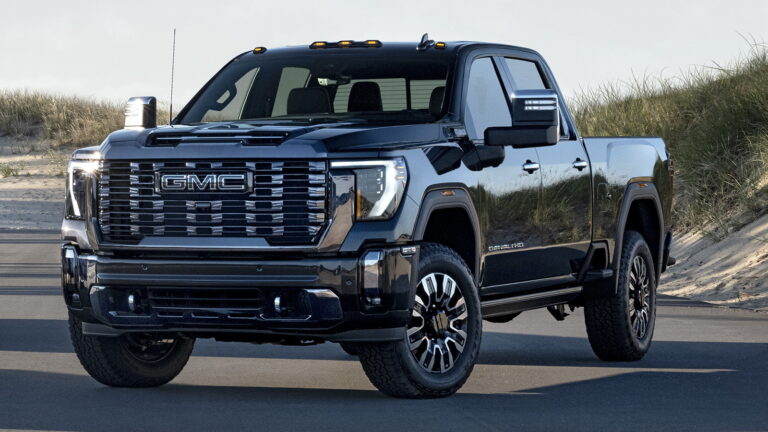
Chevrolet Silverado HD (2500HD, 3500HD) & GMC Sierra HD (2500HD, 3500HD) – Powered by Duramax
General Motors offers two distinct heavy-duty brands, Chevrolet and GMC, which share the same underlying platform and the powerful Duramax 6.6L V8 turbo-diesel engine. The Duramax is known for its smooth operation, quick throttle response, and strong performance.
- Strengths: Excellent blend of power, refinement, and user-friendly technology. The Duramax engine is highly regarded for its performance and reliability. GMC models offer a more premium aesthetic and feature set, while Chevrolet focuses on rugged capability.
- Considerations: Some might find the interior styling slightly less modern than Ram in recent generations, though still very functional and comfortable.
Each brand has its dedicated fan base, and all three offer exceptional 2500 and 3500 diesel trucks for sale. Your choice often comes down to personal preference for styling, interior ergonomics, specific features, and the legendary engine you trust most.
New vs. Used 2500 and 3500 Diesel Trucks For Sale: Making the Right Choice
Deciding whether to buy a new or used heavy-duty diesel truck is a critical step, influenced by budget, desired features, and risk tolerance. Both options present distinct advantages and disadvantages.
Buying a New Diesel Truck
Pros:
- Latest Technology and Features: New trucks come with the most current safety, infotainment, and towing technologies.
- Full Manufacturer Warranty: Provides peace of mind against unexpected repairs.
- Customization: You can order a truck precisely to your specifications.
- Zero History Concerns: You know the truck’s entire history from day one.
Cons:
- High Purchase Price: New heavy-duty diesels are a significant investment.
- Rapid Depreciation: The steepest depreciation occurs in the first few years.
- Higher Insurance Costs: Generally, new vehicles cost more to insure.
Buying a Used Diesel Truck
Pros:
- Significant Cost Savings: Used trucks are considerably more affordable, allowing you to get a higher trim level or more capability for your budget.
- Slower Depreciation: Much of the initial depreciation has already occurred.
- Proven Reliability: Older models often have established track records for reliability (or known issues).
- Wider Selection: A broader range of model years and configurations is available.
Cons:
- Potential for Unknown History: Unless meticulous records are kept, you might not know the full story of the truck’s past.
- Wear and Tear: Components will have mileage and age on them, potentially requiring more immediate maintenance or repairs.
- Limited Warranty: Factory warranty may be expired or limited. Aftermarket warranties are an option but come at a cost.
- Older Technology: May lack the very latest safety or convenience features.
Pro tips from us: If budget is a primary concern, a used diesel truck is an excellent way to get into a highly capable vehicle. Aim for a truck that is 3-5 years old to benefit from significant depreciation while still potentially having some modern features and lower mileage.
What to Look For When Buying a Used Diesel Truck (A Crucial Inspection Guide)
When searching for used 2500 and 3500 diesel trucks for sale, a thorough inspection is paramount. Diesels are robust, but they also have specific components that can be costly to repair if neglected. Don’t rush this process.
1. Engine Inspection: The Heart of the Diesel
- Listen Carefully: Start the engine cold if possible. Listen for abnormal noises like knocking, ticking, or excessive rattling. A diesel "clatter" is normal, but anything unusually loud or metallic warrants concern.
- Check for Leaks: Inspect under the hood and beneath the truck for any oil, coolant, or fuel leaks. Pay close attention to the turbocharger, injectors, and around the oil pan.
- Exhaust Smoke: A puff of white smoke on a cold start is common, but persistent white, blue, or black smoke during operation can indicate serious issues (e.g., coolant burning, oil burning, or fuel system problems, respectively).
- Fluid Condition: Check the engine oil (should be dark but not sludgy), coolant (should be clean and correct color), and power steering fluid.
- Turbocharger Play: If accessible and safe, check for excessive shaft play in the turbocharger by gently wiggling the compressor wheel. A little play is normal, but a lot indicates wear.
- DEF System (if applicable): For newer models, ensure the Diesel Exhaust Fluid (DEF) system isn’t showing any fault codes. This system is crucial for emissions and can be expensive to fix.
2. Transmission Performance
- Fluid Check: On automatics, check the transmission fluid level and condition. It should be reddish, clear, and not smell burnt.
- Test Drive Shifts: During your test drive, pay close attention to the transmission. Shifts should be smooth and predictable, without harsh jerking, slipping, or delayed engagement. Test both upshifts and downshifts.
- Tow/Haul Mode: If equipped, engage the tow/haul mode to see if it functions correctly and alters shift points.
3. Suspension and Brakes
- Visually Inspect: Look for worn shock absorbers (leaking fluid, rusty shafts), broken leaf springs, or damaged suspension components. Bounce each corner of the truck to check for excessive rebound.
- Tires: Check for even tire wear. Uneven wear can indicate alignment issues or worn suspension components.
- Brakes: During the test drive, ensure the brakes are firm, stop the truck smoothly, and don’t pull to one side. Listen for grinding or squealing.
4. Frame and Body Condition
- Rust: Heavy-duty trucks often work hard and in harsh conditions. Inspect the frame thoroughly for excessive rust, especially in regions that use road salt. Surface rust is common; deep, flaking, or penetrating rust is a red flag.
- Accident Damage: Look for misaligned body panels, inconsistent paint colors, overspray, or signs of welding on the frame, which could indicate a previous accident.
- Underbody: Inspect the entire undercarriage for damage from off-roading or heavy use.
5. Maintenance Records: Your Best Friend
- Ask for Records: This is perhaps the most crucial step. A truck with a complete service history – especially for a diesel – is invaluable. It shows the owner cared for the vehicle and helps you anticipate future maintenance.
- Look for: Regular oil changes (with correct diesel-specific oil), fuel filter replacements, transmission services, and any major component replacements.
6. The Test Drive: Beyond the Pavement
- Drive It Like You’d Use It: Don’t just drive around the block. Take it on the highway to check for vibrations at speed, listen for wind noise, and test acceleration.
- Braking Test: Perform a few controlled stops to ensure the brakes are adequate.
- All Features: Test all lights, wipers, HVAC, infotainment, 4WD system, trailer brake controller, and any other features.
7. Pre-Purchase Inspection (PPI)
- Mandatory Step: Common mistakes to avoid are foregoing a professional pre-purchase inspection by an independent mechanic specializing in diesel trucks. Even if you’re mechanically inclined, a third-party expert can spot issues you might miss. This small investment can save you thousands in potential repairs.
- Specialized Knowledge: A diesel mechanic will know the common failure points for specific makes and models and have the diagnostic tools to read engine codes and assess the health of complex diesel systems.
Essential Features and Options to Consider
When you’re sifting through 2500 and 3500 diesel trucks for sale, keep an eye out for features that align with your specific needs.
- Cab Configurations:
- Regular Cab: Two doors, maximum bed length, often for pure work.
- Extended/Quad Cab: Two full-size front doors and two smaller rear doors, offering some rear seating.
- Crew Cab: Four full-size doors, most spacious rear seating, ideal for families or work crews.
- Bed Lengths:
- Short Bed (approx. 6.5 feet): More maneuverable, but less cargo space.
- Long Bed (approx. 8 feet): Maximum cargo space, essential for some fifth-wheel hitches and larger items.
- 4×4 vs. 4×2: If you’ll encounter snow, mud, rough terrain, or need extra traction for boat ramps, 4×4 (four-wheel drive) is indispensable. Otherwise, 4×2 (two-wheel drive) is cheaper and slightly more fuel-efficient.
- Towing Packages: Look for integrated trailer brake controllers, heavy-duty alternators, transmission coolers, and fifth-wheel/gooseneck prep packages if you plan on serious towing.
- Axle Ratios: A "lower" (numerically higher) axle ratio (e.g., 3.73 or 4.10) provides more towing power but slightly worse fuel economy, while a "higher" (numerically lower) ratio (e.g., 3.42) is better for highway cruising.
- Infotainment and Safety Tech: Modern trucks offer advanced touchscreens, navigation, Apple CarPlay/Android Auto, blind-spot monitoring, adaptive cruise control, and more. Decide which features are priorities for you.
Financing Your Heavy-Duty Diesel Truck
Whether new or used, a heavy-duty diesel truck is a substantial investment, and understanding your financing options is crucial.
- Dealership Financing: Convenient, often offering competitive rates, especially for new trucks. They can also work with multiple lenders.
- Bank/Credit Union Loans: Often provide excellent rates, especially if you have a strong credit history and an existing relationship. It’s wise to get pre-approved before visiting a dealership to strengthen your negotiating position.
- Interest Rates and Terms: Pay close attention to both the interest rate and the loan term. Longer terms mean lower monthly payments but more interest paid over the life of the loan.
Maintaining Your Diesel Truck for Longevity
Based on my experience, the key to a long and reliable life for your heavy-duty diesel truck is diligent maintenance. While more robust, diesel engines have specific needs.
- Regular Oil Changes: Use only diesel-specific engine oil at recommended intervals. Diesel engines produce more soot, which can contaminate oil faster.
- Fuel Filter Replacement: Diesel fuel injection systems are highly precise and sensitive to contaminants. Regularly replacing the fuel filter is critical to protect injectors and the fuel pump.
- DEF (Diesel Exhaust Fluid) Management: For newer trucks, keep the DEF tank topped off. Running out will limit engine power.
- Coolant System Checks: Diesel engines run hotter and require robust cooling systems. Check coolant levels and condition regularly.
- Transmission Service: Follow the manufacturer’s recommendations for transmission fluid and filter changes, especially if you frequently tow heavy loads.
- Air Filter: A clean air filter is vital for engine performance and efficiency.
For an even deeper dive into keeping your diesel running strong, you might find our guide on incredibly useful. (Internal Link Placeholder)
Where to Find 2500 and 3500 Diesel Trucks For Sale
The search for your ideal heavy-duty truck can take you to several places.
- Dealerships: Both new and used car dealerships are primary sources. Franchised dealerships for Ford, Ram, Chevy, and GMC will have the widest selection of their respective new models and certified pre-owned options. Used car lots will offer a mix of all brands.
- Online Marketplaces: Websites like AutoTrader, CarGurus, Cars.com, and even eBay Motors are excellent for browsing a vast inventory of 2500 and 3500 diesel trucks for sale from both dealerships and private sellers across a wide geographic area.
- Private Sellers: Often found through online classifieds (like Facebook Marketplace or Craigslist) or local ads. Buying from a private seller can sometimes yield a better price, but it requires more diligence on your part regarding inspections and paperwork.
- Auctions: Government, fleet, and public auctions can offer great deals, but they are typically "as-is" sales, carrying higher risk. This option is best for experienced buyers or those with a trusted mechanic on standby.
The Future of Heavy-Duty Diesel Trucks
While electric vehicles are gaining traction, the heavy-duty diesel truck segment faces unique challenges in electrification due to the sheer power and range required for their work. Diesel will likely remain the dominant powertrain for the foreseeable future in this class, albeit with continuous advancements in emissions control and efficiency. Manufacturers are constantly innovating to meet stricter regulations while maintaining the power and reliability customers demand. For a broader perspective on how vehicle technology is evolving, you might explore resources like the EPA’s fuel economy guides. (External Link Placeholder – e.g., to fueleconomy.gov or a similar reputable source)
Conclusion: Your Journey to a Heavy-Duty Diesel Truck Starts Now
Finding the right 2500 or 3500 diesel truck for sale is a journey that combines research, careful inspection, and understanding your specific needs. These trucks are more than just vehicles; they are powerful tools designed to conquer demanding tasks and provide reliable service for years to come. By understanding the differences between models, knowing what to look for during an inspection, and prioritizing diligent maintenance, you’ll be well-equipped to make an informed decision.
Whether you need maximum towing capacity for a large RV, robust hauling for commercial work, or simply the unparalleled durability of a diesel, the perfect heavy-duty truck is out there waiting for you. Take your time, do your homework, and prepare to experience the power and capability that only a 2500 or 3500 diesel truck can deliver. Happy hunting!